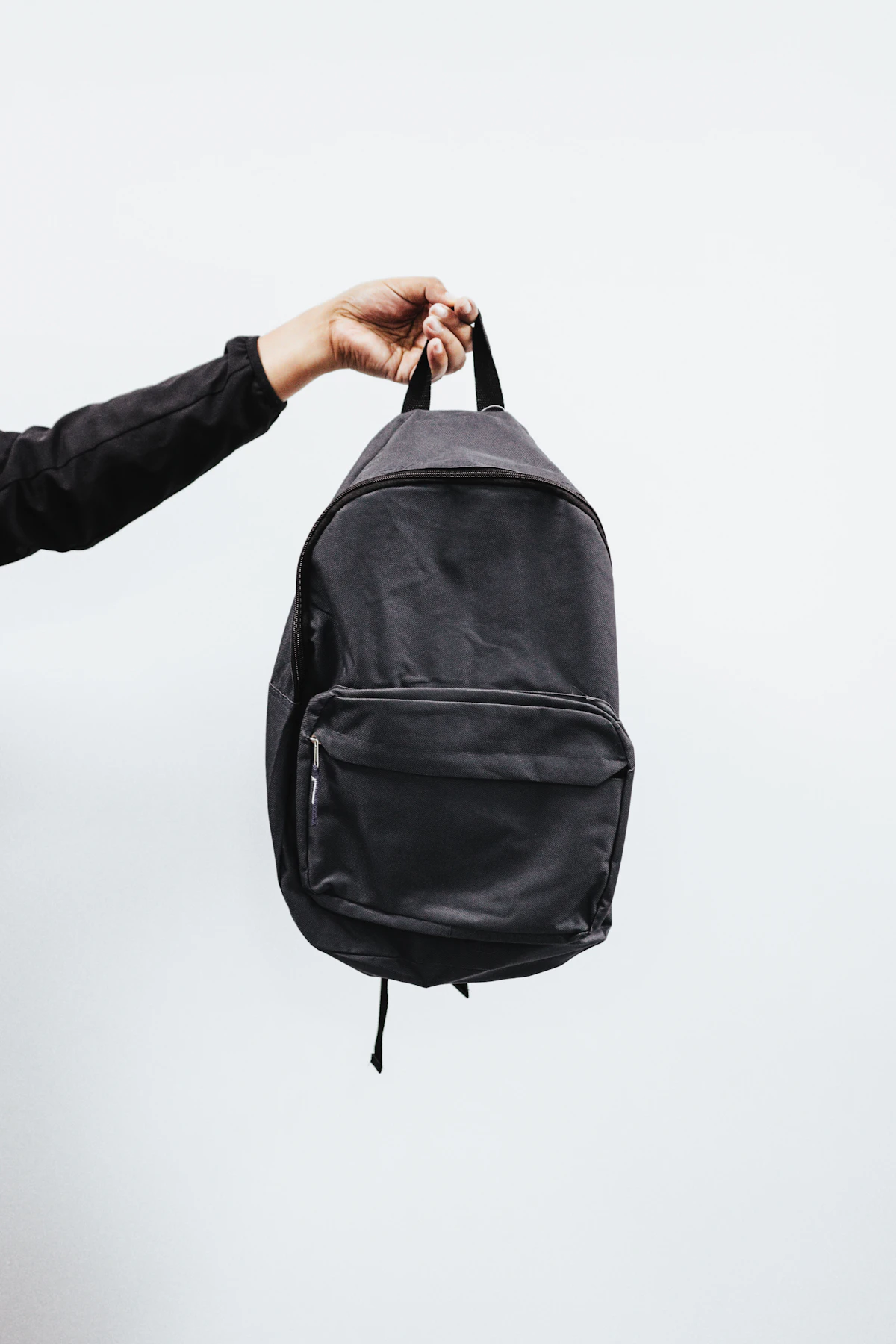
A second bag sounds simple until you try to live with one for a whole trip. It has to fit beside a rolling suitcase or under an aircraft seat, hold the things you need during the journey, and still be comfortable when you carry it through a station, across a car park, or along a street to your accommodation. The choice between a backpack and a duffel is therefore less about which shape looks better and more about how you travel, how much you carry, and how often the bag leaves your shoulder or your hand.
How capacity is really used
Stated capacity can be misleading, because two bags with similar volumes can feel very different once packed. A backpack tends to be tall and narrow, which suits clothes folded in layers, a laptop sleeve against the back panel, and small pockets for documents and chargers. A duffel tends to be wide and open, which suits bulky jumpers, shoes, and items that do not fold neatly. Neither layout is automatically better; the question is what you actually pack and how much order you want while you are travelling.
Weight matters too, especially when the second bag must meet a cabin allowance. Airlines set their own size and weight limits for cabin bags and personal items, and those limits vary by airline, fare, cabin, and aircraft, so always check your airline before you travel. The IATA passenger baggage rules page explains how allowances commonly vary and why airline conditions of carriage always apply. A lighter empty bag leaves more allowance for what is inside, and a bag that is only just within the size limit when empty may exceed it once packed and bulging.
Carrying comfort on the move
Comfort is where backpacks usually earn their reputation. Two shoulder straps, a chest strap, and a padded back panel distribute weight across the torso, which makes a heavier load easier to carry for longer distances. That matters on trips with long walks between platforms, uneven pavements, or accommodation up several flights of stairs. A backpack also keeps both hands free for tickets, a phone, a coffee, or a child’s hand, which can make a busy interchange noticeably calmer.
Duffels are comfortable in a different way. Carried by hand or over one shoulder, a duffel is easy to pick up, set down, and slide into a car boot or an overhead compartment. Many duffels also have a strap that slides over the extended handle of a rolling suitcase, which turns two bags into one rolling unit through an airport. The trade-off appears when the duffel is heavy: all of the weight hangs from one side, which can strain a shoulder on a long walk. A removable shoulder strap with padding helps, but it does not change the basic physics of carrying weight on one side.
Cabin-only trips and the second-bag role
On a cabin-only trip, the second bag often becomes the personal item that must fit under the seat in front of you, while a larger cabin bag goes overhead. In that role, a backpack usually fits the space well because its shape matches the area under a seat, and its pockets keep a passport, headphones, and a charger within reach without opening the main compartment. A soft duffel can also fit, but it may need to be packed less full to squeeze into the same space, and finding a small item can mean opening the whole bag in a cramped seat.
Access during the flight is another practical difference. In a backpack, the top pocket or a front organiser pocket can hold the items you want during the flight, while the main compartment stays stowed. In a duffel, the wide opening is an advantage at a hotel but less convenient in a seat, where space to open a bag fully is limited. Travellers who like to keep everything in one place during the flight may prefer the duffel’s single large space; travellers who like to separate flight essentials from the rest of their packing may prefer the backpack’s compartments.
Checked combinations and choosing between them
When a checked suitcase carries most of your luggage, the second bag takes on a narrower job: it holds valuables, electronics, medicines, documents, and a change of clothes, and it stays with you throughout the journey. In this combination, a backpack works well because it is easy to carry once the suitcase is checked in, and it keeps essentials organised during a long travel day. A duffel works well when the second bag needs to hold overflow from the suitcase, such as shoes or bulky clothing, because its open shape accepts awkward items without a struggle.
- Choose a backpack when you will walk with the bag for longer stretches or need your hands free.
- Choose a duffel when you need a wide opening, carry bulky items, or mostly move the bag short distances.
- Check size and weight allowances for every airline on your itinerary before you pack.
- Pack the bag at home and carry it for a realistic distance before deciding it is comfortable.
There is no single correct answer, and many travellers end up owning both shapes for different trips. A weekend city break with only a cabin bag may suit a backpack, while a longer stay with a checked suitcase and a car may suit a duffel. Start from the trip, not from the bag: the route, the walking, the airline rules, and the load you genuinely carry. When those are clear, the choice between a backpack and a duffel usually makes itself, and the second bag becomes something you barely notice, which is exactly what a good second bag should be.